



Last Producer Visit of 2025 — Maison Stéphan (Côte-Rôtie)
A cellar and vineyard visit with the next generation of Maison Stéphan, exploring biodynamic practice, evolving winemaking choices, and the enduring terroirs of Côte-Rôtie
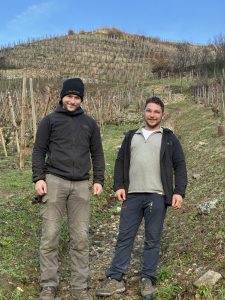
Jean-Michel was away on his annual hunt, so his sons Romain and Dorian—who joined the family winery in 2017 and 2022—took us through the cellar, the parcels, and a broad tasting that ranged from bottled 2023s and barrel tasting 2024s and 2025s. A few practical and surprising things stood out.
First — the corks (or ‘suppo’ in poetic French); save for the Cornas and one Côte-Rôtie, recent bottlings were finished with bio-sourced plastic corks rather than cork—in other words, plant-based polymers made from materials such as beetroots / corn that are engineered to foster a controlled oxygen transfer similar to traditional cork. These closures have become increasingly common as producers look for consistent, taint-free seals and customizable oxygen transfer rates.
As the leading biodynamic winery in the Northern Rhône, the Stephans prepare their own biodynamic preparations (500/501 etc.) with neighbouring farmers and paysans, and bring that collective work into the vineyard practices. The quartz for the 501 mixture is dug out from the Binardes parcel directly behind the winery. Additionally, the domaine works by gravity to minimize oxidation, and all wines tasted were zero-zero (sans soufre ajouté).
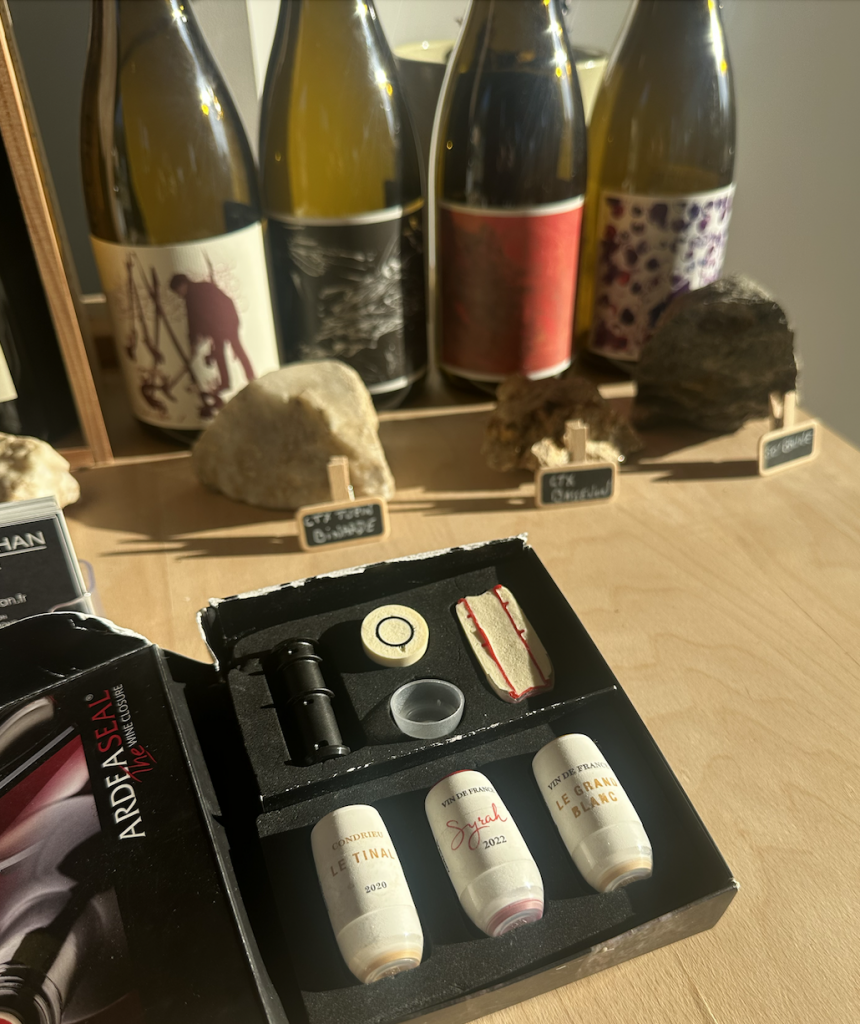 Maison Stephan is expanding its VDF (Vin de France) range to be an approachable, entry-level line. Le Grand Blanc and Syrah are produced from estate-grown grapes, while the Grenache and Gamay are purchased. Notable points:
Le Grand Blanc — a bright blend of Roussanne (50%), Marsanne (30%) and Viognier (20%), cold-pressed and barrel-aged. The fruit comes from high-altitude (400m), low-yielding vines that give striking natural acidity and freshness.
VDF Syrah — a lively cuvée assembled from young Syrah planted in Condrieu, Vérin, and the Roussillon, fermented with semi-carbonic techniques and aged in concrete. The wine is intentionally made as a “Petit Saint-Joseph” in spirit; juicy and immediately drinkable, but with a serious backbone.
While on the road, we also learned about an interesting collaboration from within our community of winemakers. Our very own Raphaël Saint-Cyr is the Gamay source for top growers, ranging from Nicolas Jacob and Labet in Jura, Maison Stephan in Northern Rhône, and Justin Dutraive in Beaujolais. We are very excited to blind taste Terroir de Bellevue grapes vinified by a wide range of winemakers with different approaches in the coming months!
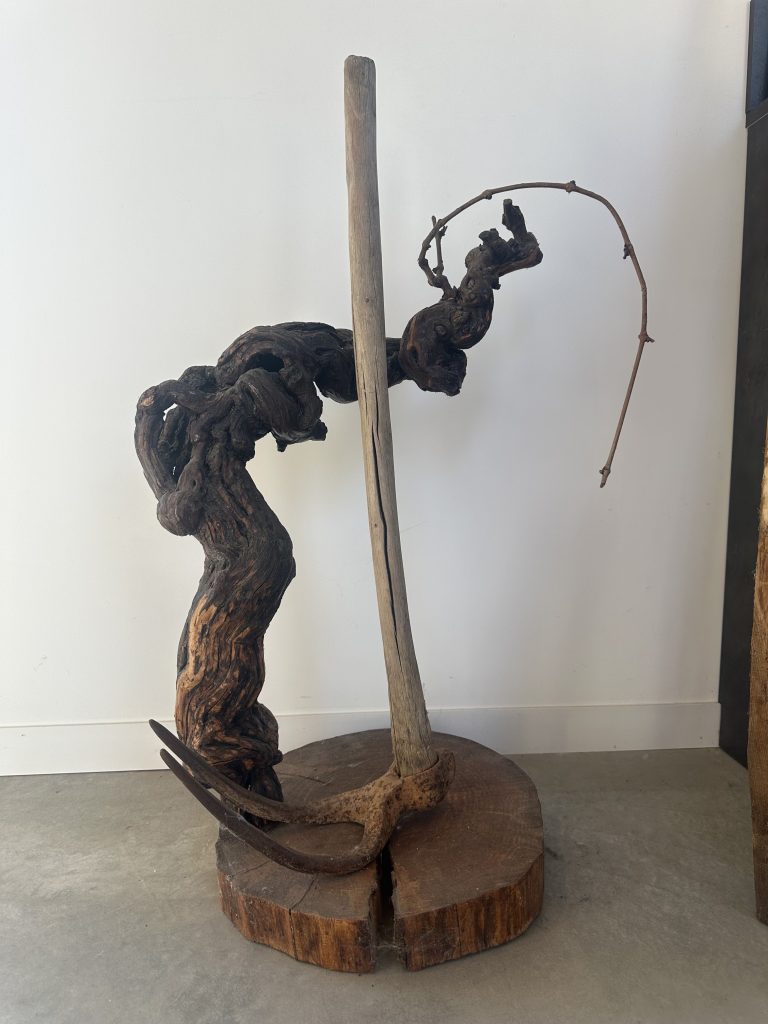
Example of 130-year-old Serine
A few vineyard highlights from the visit deserve repeating. We walked the Coteaux de Bassenon parcel — steep, granitic / migmatitic soils on an incline (40% gradient) planted to incredibly old vines, including 130-year-old Serine and Viognier plantings. The parcel’s Serine vines are a marvel to see. Serine is best understood not as an entirely different grape species but as a local, massal selection / intra-varietal form of Syrah that has adapted to the Côte-Rôtie microclimate.
Growers treat it distinctly because of its historical role and specific agronomic traits in the region. Serine tends to produce more open, rugby-ball shaped bunches (less compact than Syrah) and, when the vines are old, give extremely low yields (one cordon, often 3–4 bunches), which explains the concentration in wines such as Bassenon and Tupin.

A couple of tasting notes and vintage observations from the day :
So’Brune 2008 (the rare schist parcel of Côte-Rôtie) showed a gourmand floral charm and a linear acidity that was beautiful with time.
L’Ultime 2021 surprised in a difficult vintage — the domaine chose to bring all Côte-Rôtie into a single cuvée that year; the result is surprisingly approachable and balanced early.
Comparing 2024 and 2025 barrels side-by-side was instructive: 2024 was a rainier year (harvest around 20 September in many plots), while 2025 saw a three-week heat spike in August with days above 40°C that briefly arrested ripening. Still, the house’s signature style—one of precise extraction, freshness, and a pronounced saline terroir note— remained present in both years.