



Ruppert-Leroy: Deep Dive on Biodynamics & Remarkably Alive 2023s
With temperatures slowly rising across Champagne, the season had fully awakened by the time we arrived at Ruppert-Leroy. Everything at the domaine seemed in motion; young cows huddled with the larger herd inside the barn, feeding on hay brought in from the surrounding vineyard parcels, the smell of cut grass still fresh in the air...
By Ryan Lim
A single pig wandered through the space, insistent and curious, looking for a hand to scratch his snout. Nearby, the horses had just returned from the vines, still carrying the calm rhythm of the fields in their bodies. Inside the winery, Bénédicte and Manu were already at work preparing biodynamic treatments for the coming season. At Ruppert-Leroy, biodynamics never feels theoretical or aestheticized — it feels deeply physical, agricultural, almost inseparable from the rhythm of daily life itself.
Bénédicte and Manu were busy preparing Preparation 500, one of the central treatments in biodynamic farming. In biodynamic philosophy, the cow is seen as a symbol of fertility and life force, and the horn itself — hollow, living, structured — is believed to channel and concentrate these energies. The preparation involves filling cow horns with manure before burying them through the winter months, allowing the material to slowly ferment and transform underground. By spring, the contents become an extraordinarily rich humus preparation, later diluted and sprayed throughout the vineyards to stimulate microbial life, rooting, and vitality within the soils.
To treat the entirety of Ruppert-Leroy’s 3.5 hectares, only four horns are needed for the season. Yet this year, Manu and Bénédicte were preparing nearly 2,500 horns, all sourced from their own cows, for biodynamic growers throughout France. Even the feed for the cows is grown directly beside the vines so that the manure itself shares the same microbiome as the vineyards it will eventually nourish. Listening to them explain the process, one quickly realizes that nothing here is approached in isolation. Everything is connected back to the land.
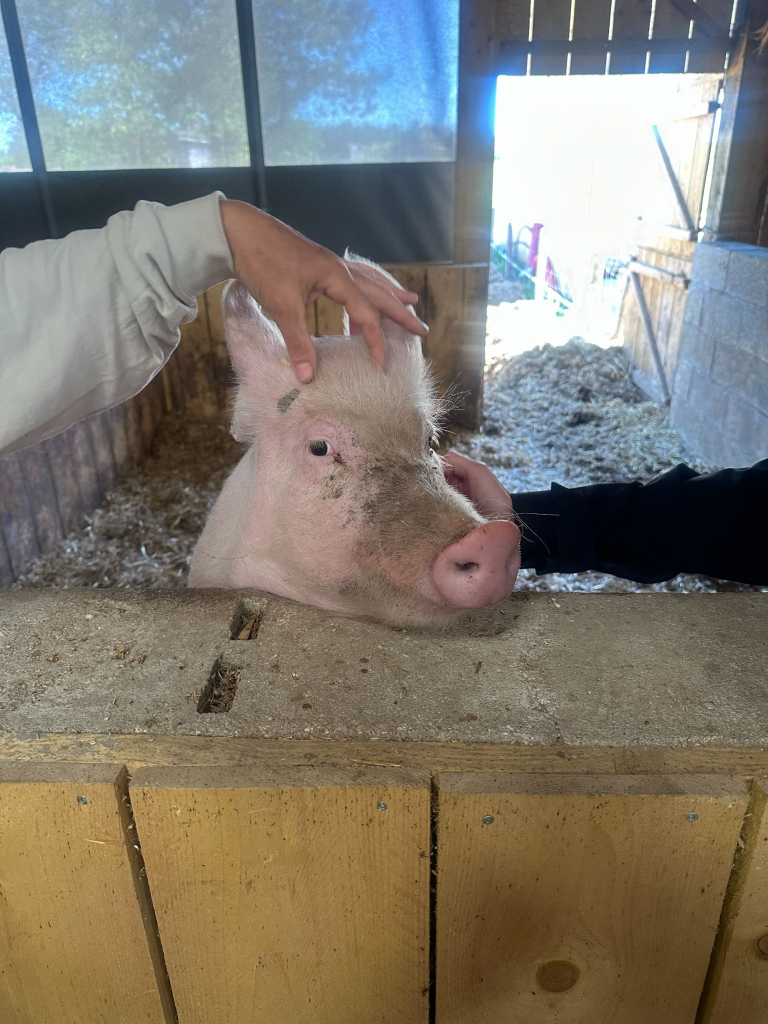
Farm animals are friends at Ruppert-Leroy
The conversation naturally drifted toward the growing season ahead. Their largest single parcel, Fosse-Grely, had once again been impacted by frost after temperatures dropped close to -4°C during a second cold spell. Chardonnay, always earlier and more vulnerable, appeared especially affected, while there was still cautious optimism for the Pinot Noir. After losing essentially the entirety of the 2024 harvest to frost, the emotional and financial realities of farming in Champagne feel increasingly impossible to ignore. Like many growers in the region, Ruppert-Leroy has had to adapt pragmatically, supplementing future production with carefully sourced purchased fruit and wines from trusted friends and neighboring growers, including Vincent Couche and parcels in Les Riceys farmed biodynamically under Demeter certification. There was no sense of compromise in these discussions, only realism — an acknowledgment that surviving climate instability now requires flexibility even among the most principled growers.
And yet despite these anxieties surrounding the future, the wines themselves radiated an almost shocking sense of joy. We tasted through the newly released Martin Fontaine 2022, aged an additional year before release, alongside the 2023s from Les Cognaux, Papillons, 11, 12, 13…23, and Fosse-Grely. Again and again, the same reaction emerged around the table: disbelief at just how compelling the 2023 vintage already feels. The wines carried the signature tension and precision that define Ruppert-Leroy — vibrant acids, chalky structure, remarkable persistence — but there was also something unusually generous and immediate about them. Where older vintages like 2014 or 2017 often leaned sharper and more austere in their youth, the 2023s seemed overflowing with fruit: red berries, crushed blackberries, tart cherry, rhubarb, blood orange. Manu compared certain wines almost jokingly to bonbon à la cerise or crème de fruits, though always balanced by the saline tension and length that prevent the wines from ever feeling heavy. There was ripeness here, certainly, but also extraordinary freshness.
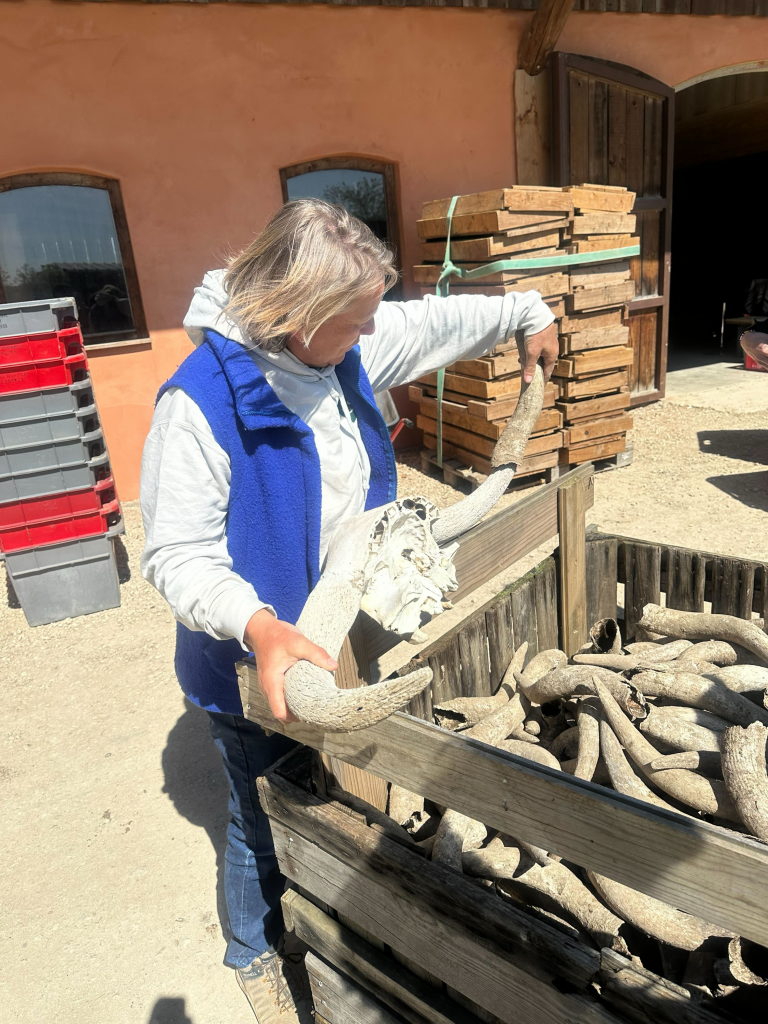
Bénédicte showing us the domaine’s cow horns to be used for biodynamic preparations
In many ways, the vintage reminded them of 2018, another warm and abundant year, though the conditions in 2023 felt even more extreme. Harvest began before sunrise, sometimes as early as six in the morning, simply to avoid the accumulating heat later in the day. For the first time, they divided the pressing into two separate presses and relied heavily on overnight cooling in a chambre froide to preserve freshness and stability in the fruit. The pace of harvest sounded almost relentless — physically exhausting, technically demanding — yet somehow the wines emerged with both concentration and energy intact. Compared to the more complicated maturities of 2022, which required constant vigilance and difficult decisions, the 2023s seem to possess an unusual clarity, as though the fruit itself arrived already carrying balance within it.
What remains perhaps most striking about Ruppert-Leroy is this coexistence of fragility and vitality. Frost, mildew, heat spikes, exhaustion — all of these realities were present in nearly every conversation throughout the visit, yet the domaine somehow continues to produce wines that feel profoundly alive rather than burdened by struggle. There is no triumphalism here, no mythology of control over nature. Instead, there is simply observation, adaptation, patience, and an almost stubborn faith that healthy soils and careful farming will continue to transmit something truthful into the wines. Tasting the 2023s, it became difficult not to feel hopeful –not because the future appears easier, but because the wines themselves still carry so much life within them.