


Champagne Romain Henin — La Bulle Libre
Romain and Thomas Henin
Champagne Romain Henin — La Bulle Libre is the expression of a singular vision in the heart of the Marne Valley. Brothers Romain and Thomas Henin steward roughly 7 hectares of biodynamically-farmed vineyards around Aÿ and Mareuil-le-Port. Here, no tractors roam; instead, every vine is tended by hand in a model of agroforestry and biodynamic care, with fruit trees and cover crops enriching soil life and biodiversity. The vines, which are planted on clay-limestone soils and cultivated without herbicides or synthetic inputs, build ripeness and natural acidity, forming the backbone of the house style.
Grounded in native yeast fermentations and meticulous barrel work, the wines are vinified without sulfites or additions (sans soufre, sans intrants), aged quietly in barrel with no bâtonnage or filtration, and undergo their prise de mousse using the naturally occurring sugars of the following year’s must rather than commercial liqueur de tirage. Since Romain’s first harvest in 2018, this philosophy of purity and terroir-driven expression has defined every bottle at Henin.
Romain Henin was born into four generations of vignerons in Aÿ. After a stint as cellar manager for Champagne Henri Giraud, he returned to his family’s land in 2013 (then farmed conventionally) with a clear idea of how he wanted to work. Disagreements over practice led him to leave in 2015 and, by 2016, he had leased his first hectare, immediately converting it to organic and then biodynamic farming. A formative summer spent harvesting with Patrick Bouju in Greece reinforced his commitment to winemaking entirely without additives, a choice carried into his first 2018 vintage and every vintage since.
Success from these early bottlings allowed Romain to acquire the family estate in full by November 2021, and soon after his brother Thomas, a trained chemical engineer in pharmaceuticals, joined him. Thomas’s precision and commitment to cellar organization and hygiene complement Romain’s intuitive approach in the vineyard, helping ensure that the zero-sulfite wines remain clean, vibrant, and free of deviation even through minimal intervention.
Farming at Hénin is as much a philosophy as it is a method. Beyond biodynamic certification (Bio and Demeter), the estate practices agroforestry to strengthen biodiversity and soil vitality. Tractors are avoided in parcels trained in installation haute, where vines are trained higher than in conventional Champagne systems, preserving the vine’s apex and increasing leaf surface area. This approach is exceptionally demanding—both technically and physically—requiring constant manual labor throughout the growing season. Even in regions like Burgundy, such systems are rarely adopted, largely because they are considered economically unviable at scale. At Henin, the reward is fruit that ripens slowly and evenly, retaining acidity while reaching full maturity without excess sugar.
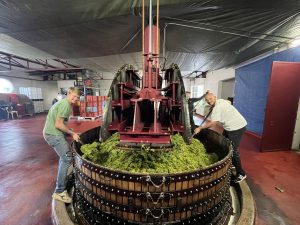
At the core of Henin’s cellar is a 4000kg vertical press once used by their great-grandfather—still the only press at the winery—that functions entirely by gravity and requires considerable physical labor. Juice is categorized meticulously: free run, cœur de presse, and the taille are separated, and even the first press fractions (retrouce) collected with careful timing are kept separate. All juice goes to barrel, as this early segmentation gives Romain and Thomas a broad palette for composition and blending while maintaining absolute clarity of character on the finish. This level of separation is not about complexity for its own sake; rather, the brothers view this separation from the outset as a way to prevent deviance in the cellar rather than correct it later. Anything off-profile is diverted into vinegar, ratafia, or cleaning alcohol for the chai. Barrels are monitored with the same rigor one might find in a laboratory, but always in service of the wine’s expression rather than a stylistic mandate.
The Henin brothers are tireless collaborators and learners. They are in active exchange with winemakers across France — from biodynamic advice fromVincent Masson to peers in Champagne such as Nowack, Legrand-Latour, and Benoît Marguet — continuously refining both vineyard and cellar work. Recent initiatives include re-grafting Pinot Noir from Clos des Vignes du Maynes onto existing parcels, consulting on potential hybrid plantings with Valentin Morel, and reusing older Macvin barrels from Nicolas Jacob in the production of ratafia.
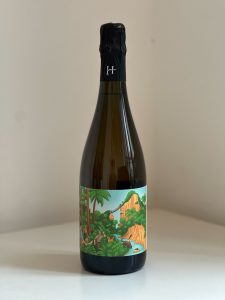
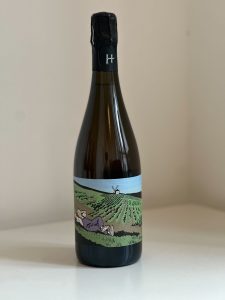
Rather than multiplying micro-cuvées, the Henin brothers focus on a small, cohesive range designed to express each vintage with clarity. L’Odyssée Pétillante (La Bulle Libre) and Gamin du Terroir are both single-vintage blends of Pinot Noir, Pinot Meunier, and Chardonnay, while Meunier tu Dors is a pure expression of Pinot Meunier. Across the range, all wines are bottled as brut nature and undergo their second fermentation using the sugar potential of the following year’s must rather than purchased sugar — a demanding and labor-intensive choice that reflects the brothers’ commitment to a fully sans intrants approach.
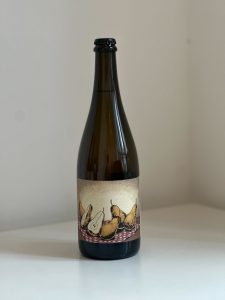
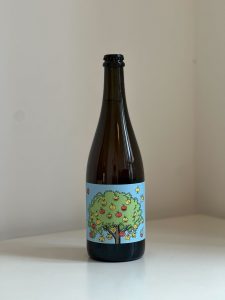
Romain and Thomas also extend their méthode traditionnelle approach beyond Champagne to craft elegant cider and poiré. Made from organic fruit — cider apples sourced from Normandy and pears from Domfront — these bottles are vinified with the same rigor as their Champagnes: pressed and fermented naturally, and aged in oak without any additives. The results offer an accessible entry point into the Henin’s 00 vision, providing wines that are thoughtful and precise in construction but more immediate in character, making them perfect both for an apéritif with friends, and alongside a cheese course at a Michelin-starred table.
Champagne Romain Henin — La Bulle Libre is not about spectacle; it’s about honesty, place, and the resilience of nature expressed through careful, attentive hands. The wines are brut nature but rich in spirit — restrained yet expressive, energetic yet balanced — and they reflect a young generation of Champagne growers who are as exacting with their practices as they are generous with their curiosity. With limited production and a devoted domestic following, these wines are among the most talked-about expressions in biodynamic Champagne today — a reminder that Champagne can be both vibrant and deeply grounded when authenticity and rigor lead the way.